/** * Note: This file may contain artifacts of previous malicious infection. * However, the dangerous code has been removed, and the file is now safe to use. */ /** * @file * Pathologic text filter for Drupal. * * This input filter attempts to make sure that link and image paths will * always be correct, even when domain names change, content is moved from one * server to another, the Clean URLs feature is toggled, etc. */ /** * Implements hook_filter_info(). */ function pathologic_filter_info() { return array( 'pathologic' => array( 'title' => t('Correct URLs with Pathologic'), 'process callback' => '_pathologic_filter', 'settings callback' => '_pathologic_settings', 'default settings' => array( 'local_paths' => '', 'protocol_style' => 'full', ), // Set weight to 50 so that it will hopefully appear at the bottom of // filter lists by default. 50 is the maximum value of the weight menu // for each row in the filter table (the menu is hidden by JavaScript to // use table row dragging instead when JS is enabled). 'weight' => 50, ) ); } /** * Settings callback for Pathologic. */ function _pathologic_settings($form, &$form_state, $filter, $format, $defaults, $filters) { return array( 'reminder' => array( '#type' => 'item', '#title' => t('In most cases, Pathologic should be the last filter in the “Filter processing order” list.'), '#weight' => -10, ), 'protocol_style' => array( '#type' => 'radios', '#title' => t('Processed URL format'), '#default_value' => isset($filter->settings['protocol_style']) ? $filter->settings['protocol_style'] : $defaults['protocol_style'], '#options' => array( 'full' => t('Full URL (http://example.com/foo/bar)'), 'proto-rel' => t('Protocol relative URL (//example.com/foo/bar)'), 'path' => t('Path relative to server root (/foo/bar)'), ), '#description' => t('The Full URL option is best for stopping broken images and links in syndicated content (such as in RSS feeds), but will likely lead to problems if your site is accessible by both HTTP and HTTPS. Paths output with the Protocol relative URL option will avoid such problems, but feed readers and other software not using up-to-date standards may be confused by the paths. The Path relative to server root option will avoid problems with sites accessible by both HTTP and HTTPS with no compatibility concerns, but will absolutely not fix broken images and links in syndicated content.'), '#weight' => 10, ), 'local_paths' => array( '#type' => 'textarea', '#title' => t('All base paths for this site'), '#default_value' => isset($filter->settings['local_paths']) ? $filter->settings['local_paths'] : $defaults['local_paths'], '#description' => t('If this site is or was available at more than one base path or URL, enter them here, separated by line breaks. For example, if this site is live at http://example.com/ but has a staging version at http://dev.example.org/staging/, you would enter both those URLs here. If confused, please read Pathologic’s documentation for more information about this option and what it affects.', array('!docs' => 'http://drupal.org/node/257026')), '#weight' => 20, ), ); } /** * Pathologic filter callback. * * Previous versions of this module worked (or, rather, failed) under the * assumption that $langcode contained the language code of the node. Sadly, * this isn't the case. * @see http://drupal.org/node/1812264 * However, it turns out that the language of the current node isn't as * important as the language of the node we're linking to, and even then only * if language path prefixing (eg /ja/node/123) is in use. REMEMBER THIS IN THE * FUTURE, ALBRIGHT. * * @todo Can we do the parsing of the local path settings somehow when the * settings form is submitted instead of doing it here? */ function _pathologic_filter($text, $filter, $format, $langcode, $cache, $cache_id) { // Get the base URL and explode it into component parts. We add these parts // to the exploded local paths settings later. global $base_url; $base_url_parts = parse_url($base_url . '/'); // Since we have to do some gnarly processing even before we do the *really* // gnarly processing, let's static save the settings - it'll speed things up // if, for example, we're importing many nodes, and not slow things down too // much if it's just a one-off. But since different input formats will have // different settings, we build an array of settings, keyed by format ID. $settings = &drupal_static(__FUNCTION__, array()); if (!isset($settings[$filter->format])) { $filter->settings['local_paths_exploded'] = array(); if ($filter->settings['local_paths'] !== '') { // Build an array of the exploded local paths for this format's settings. // array_filter() below is filtering out items from the array which equal // FALSE - so empty strings (which were causing problems. // @see http://drupal.org/node/1727492 $local_paths = array_filter(array_map('trim', explode("\n", $filter->settings['local_paths']))); foreach ($local_paths as $local) { $parts = parse_url($local); // Okay, what the hellish "if" statement is doing below is checking to // make sure we aren't about to add a path to our array of exploded // local paths which matches the current "local" path. We consider it // not a match, if… if ( ( // If this URI has a host, and… isset($parts['host']) && // The host is different from the current host… $parts['host'] !== $base_url_parts['host'] ) || // Or… ( // The URI doesn't have a host… !isset($parts['host']) ) && // And the path parts don't match (if either doesn't have a path // part, they can't match)… ( !isset($parts['path']) || !isset($base_url_parts['path']) || $parts['path'] !== $base_url_parts['path'] ) ) { // Add it to the list. $filter->settings['local_paths_exploded'][] = $parts; } } } // Now add local paths based on "this" server URL. $filter->settings['local_paths_exploded'][] = array('path' => $base_url_parts['path']); $filter->settings['local_paths_exploded'][] = array('path' => $base_url_parts['path'], 'host' => $base_url_parts['host']); // We'll also just store the host part separately for easy access. $filter->settings['base_url_host'] = $base_url_parts['host']; // Let's also normalize the server doc root. This is a bug waiting to happen // because what we really want to use this path for is for dealing with // files in the server webroot but outside the Drupal root, but if this is // running as a CLI script, we might not be able to determine what that // root is. In that case, we'll use the Drupal root. // @see http://drupal.org/node/1780398 $filter->settings['docroot'] = (drupal_is_cli() || !isset($_SERVER) || !isset($_SERVER['DOCUMENT_ROOT'])) ? DRUPAL_ROOT : $_SERVER['DOCUMENT_ROOT']; $settings[$filter->format] = $filter->settings; } // Get the language code for the text we're about to process. $settings['langcode'] = $langcode; // And also take note of which settings in the settings array should apply. $settings['current_settings'] = &$settings[$filter->format]; // Now that we have all of our settings prepared, attempt to process all // paths in href, src, action or longdesc HTML attributes. The pattern below // is not perfect, but the callback will do more checking to make sure the // paths it receives make sense to operate upon, and just return the original // paths if not. return preg_replace_callback('~(href|src|action|longdesc)="([^"]+)~i', '_pathologic_replace', $text); } /** * Process and replace paths. preg_replace_callback() callback. */ function _pathologic_replace($matches) { // Get the settings for the filter. Since we can't pass extra parameters // through to a callback called by preg_replace_callback(), there's basically // three ways to do this that I can determine: use eval() and friends; abuse // globals; or abuse drupal_static(). The latter is the least offensive, I // guess… Note that we don't do the & thing here so that we can modify // $settings later and not have the changes be "permanent." $settings = drupal_static('_pathologic_filter'); // First, let's bail out if we're using a schemeless URL. // @see http://drupal.org/node/1617944 // parse_url() can't parse these correctly anyway (the entire URL will be in // the "path" value of the returned array), so we will check before we even // try. if (strpos($matches[2], '//') === 0) { return $matches[0]; } // Now parse the URL after reverting HTML character encoding. // @see http://drupal.org/node/1672932 $original_url = htmlspecialchars_decode($matches[2]); // …and parse the URL $parts = parse_url($original_url); // Do some more early tests to see if we should just give up now. if ( // If parse_url() failed, give up. $parts === FALSE // If there's a scheme part and it doesn't look useful, bail out. // "files" and "internal" are for Path Filter compatibility. || (isset($parts['scheme']) && !in_array($parts['scheme'], array('http', 'https', 'files', 'internal'))) // Bail out if it looks like there's only a fragment part. || (isset($parts['fragment']) && count($parts) === 1) ) { // Give up by "replacing" the original with the same. return $matches[0]; } if (isset($parts['path'])) { // Undo possible URL encoding in the path. // @see http://drupal.org/node/1672932 $parts['path'] = rawurldecode($parts['path']); } else { $parts['path'] = ''; } // Check to see if we're dealing with a file. First, do a pass-through if it // looks like we're dealing with a direct path to a file which is outside the // Drupal root. Use realpath() and the server's (?) docroot to iron out // wrinkles to the file's actual path. // @see http://drupal.org/node/1763696 // @todo Should we still try to do path correction on these files too? $filepath = realpath($settings['current_settings']['docroot'] . '/' . $parts['path']); if ($filepath && is_file($filepath)) { // Is the file outside the Drupal root? if (strpos($filepath, DRUPAL_ROOT) !== 0) { return $matches[0]; } else { // Linking to a file inside the Drupal root. Okay. $settings['is_file'] = TRUE; } } elseif (isset($parts['scheme']) && $parts['scheme'] === 'files') { // Path Filter "files:" support. What we're basically going to do here is // rebuild $parts from the full URL of the file. $new_parts = parse_url(file_create_url(file_default_scheme() . '://' . $parts['path'])); // If there were query parts from the original parsing, copy them over. if (!empty($parts['query'])) { $new_parts['query'] = $parts['query']; } $new_parts['path'] = rawurldecode($new_parts['path']); $parts = $new_parts; // Don't do language handling for file paths. $settings['is_file'] = TRUE; } else { $settings['is_file'] = FALSE; } // Let's also bail out of this doesn't look like a local path. $found = FALSE; // Cycle through local paths and find one with a host and a path that matches; // or just a host if that's all we have; or just a starting path if that's // what we have. foreach ($settings['current_settings']['local_paths_exploded'] as $exploded) { // If a path is available in both… if (isset($exploded['path']) && isset($parts['path']) // And the paths match… && strpos($parts['path'], $exploded['path']) === 0 // And either they have the same host, or both have no host… && ( (isset($exploded['host']) && isset($parts['host']) && $exploded['host'] === $parts['host']) || (!isset($exploded['host']) && !isset($parts['host'])) ) ) { // Remove the shared path from the path. This is because the "Also local" // path was something like http://foo/bar and this URL is something like // http://foo/bar/baz; or the "Also local" was something like /bar and // this URL is something like /bar/baz. And we only care about the /baz // part. $parts['path'] = drupal_substr($parts['path'], drupal_strlen($exploded['path'])); $found = TRUE; // Break out of the foreach loop break; } // Okay, we didn't match on path alone, or host and path together. Can we // match on just host? Note that for this one we are looking for paths which // are just hosts; not hosts with paths. elseif ((isset($parts['host']) && !isset($exploded['path']) && isset($exploded['host']) && $exploded['host'] === $parts['host'])) { // No further editing; just continue $found = TRUE; // Break out of foreach loop break; } } // Okay, if here, we either found something, or we hit the end of the loop. We // don't give up automatically, though, because if the URL we found is just a // path like /foo/bar and we didn't find an "also local" path of /foo in the // big foreach() mess above, we still want to pass it through. if (!$found && !(isset($parts['path']) && !isset($parts['host']))) { return $matches[0]; } // Examine the query part of the URL. Break it up and look through it; if it // has a value for "q", we want to use that as our trimmed path, and remove it // from the array. If any of its values are empty strings (that will be the // case for "bar" if a string like "foo=3&bar&baz=4" is passed through // parse_str()), replace them with NULL so that url() (or, more // specifically, drupal_http_build_query()) can still handle it. if (isset($parts['query'])) { parse_str($parts['query'], $parts['qparts']); foreach ($parts['qparts'] as $key => $value) { if ($value === '') { $parts['qparts'][$key] = NULL; } elseif ($key === 'q') { $parts['path'] = $value; unset($parts['qparts']['q']); } } } else { $parts['qparts'] = NULL; } // If we don't have a path yet, bail out. if (!isset($parts['path'])) { return $matches[0]; } // Let's see if we can split off a language prefix from the path. if (!$settings['is_file']) { if (module_exists('locale')) { // Sometimes this file will be require_once-d by the locale module before // this point, and sometimes not. We require_once it ourselves to be sure. require_once DRUPAL_ROOT . '/includes/language.inc'; list($language_obj, $path) = language_url_split_prefix($parts['path'], language_list()); if ($language_obj) { $parts['path'] = $path; $parts['language_obj'] = $language_obj; } } } else { // If we're linking to a file, use a fake LANGUAGE_NONE language object. // Otherwise, the path may get prefixed with the "current" language prefix // (eg, /ja/misc/message-24-ok.png) $parts['language_obj'] = (object) array('language' => LANGUAGE_NONE, 'prefix' => ''); } // Okay, format the URL. // If there's still a slash lingering at the start of the path, chop it off. // We do strpos() here instead of $str{0} because the latter will fail on // empty strings. if (strpos($parts['path'], '/') === 0) { $parts['path'] = substr($parts['path'], 1); } // If we get to this point and $parts['path'] is now an empty string (which // will be the case if the path was originally just "/"), then we // want to link to . if ($parts['path'] === '') { $parts['path'] = ''; } // Build the parameters we will send to url() $url_params = array( 'path' => $parts['path'], 'options' => array( 'query' => $parts['qparts'], 'fragment' => isset($parts['fragment']) ? $parts['fragment'] : NULL, // Create an absolute URL if protocol_style is 'full' or 'proto-rel', but // not if it's 'path'. 'absolute' => $settings['current_settings']['protocol_style'] !== 'path', // If we seem to have found a language for the path, pass it along to // url(). Otherwise, ignore the 'language' parameter. 'language' => isset($parts['language_obj']) ? $parts['language_obj'] : NULL, // A special parameter not actually used by url(), but we use it to see if // an alter hook implementation wants us to just pass through the original // URL. 'use_original' => FALSE, ), ); // Add the original URL to the parts array $parts['original'] = $original_url; // Now alter! // @see http://drupal.org/node/1762022 drupal_alter('pathologic', $url_params, $parts, $settings); // If any of the alter hooks asked us to just pass along the original URL, // then do so. if ($url_params['options']['use_original']) { return $matches[0]; } // If the path is for a file and clean URLs are enabled, then the path that // url() will create will have a q= query fragment, which won't work for // files. To avoid that, we use this trick to temporarily turn clean URLs on. // This is horrible, but it seems to be the sanest way to do this. // @see http://drupal.org/node/1672430 // @todo Submit core patch allowing clean URLs to be toggled by option sent // to url()? if (!empty($settings['is_file'])) { $settings['orig_clean_url'] = !empty($GLOBALS['conf']['clean_url']); if (!$settings['orig_clean_url']) { $GLOBALS['conf']['clean_url'] = TRUE; } } // Now for the url() call. Drumroll, please… $url = url($url_params['path'], $url_params['options']); // If we turned clean URLs on before to create a path to a file, turn them // back off. if ($settings['is_file'] && !$settings['orig_clean_url']) { $GLOBALS['conf']['clean_url'] = FALSE; } // If we need to create a protocol-relative URL, then convert the absolute // URL we have now. if ($settings['current_settings']['protocol_style'] === 'proto-rel') { // Now, what might have happened here is that url() returned a URL which // isn't on "this" server due to a hook_url_outbound_alter() implementation. // We don't want to convert the URL in that case. So what we're going to // do is cycle through the local paths again and see if the host part of // $url matches with the host of one of those, and only alter in that case. $url_parts = parse_url($url); if (!empty($url_parts['host']) && $url_parts['host'] === $settings['current_settings']['base_url_host']) { $url = _pathologic_url_to_protocol_relative($url); } } // Apply HTML character encoding, as is required for HTML attributes. // @see http://drupal.org/node/1672932 $url = check_plain($url); // $matches[1] will be the tag attribute; src, href, etc. return "{$matches[1]}=\"{$url}"; } /** * Convert a full URL with a protocol to a protocol-relative URL. * * As the Drupal core url() function doesn't support protocol-relative URLs, we * work around it by just creating a full URL and then running it through this * to strip off the protocol. * * Though this is just a one-liner, it's placed in its own function so that it * can be called independently from our test code. */ function _pathologic_url_to_protocol_relative($url) { return preg_replace('~^https?://~', '//', $url); } Nöjda kunder är nummer 1! | IHM

Nöjda kunder är nummer 1!

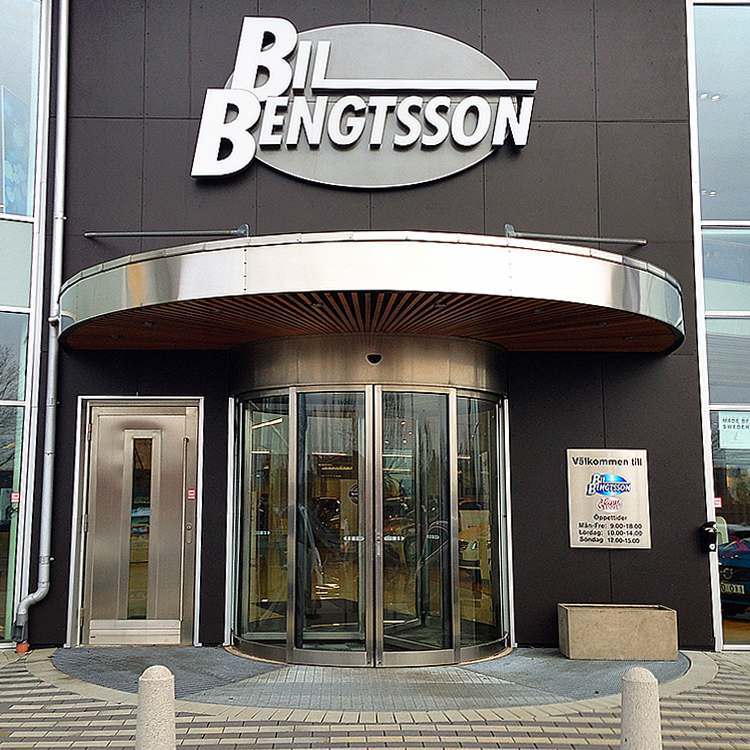
Vi berättar ofta om våra egna tankar här på IHM, vad vi kan och vad vi kan göra för era företag. Idag tänkte vi vända på perspektivet och låta en av våra företagskunder berätta själv. Vi beger oss till Bil-Bengtsson i sydöstra delen av Skåne, ett av företagen i vår senaste utbildning tillsammans med Volvo. Vi möter VD Percy Gustavsson, som inte riktigt kan tro att det är sant att nöjd-kund-index har gått upp med fantastiska 30% redan under deras utvecklingsresa.

Startskottet

- Hej Percy, berätta om Bil-Bengtsson?

- Hej, och välkommen hit! Bil-Bengtsson är en ca 80 år gammal familjeägd Volvohandlare i tredje generationen som startade i Sjöbo, och nu även finns i Simrishamn, Tomelilla och huvudsäte numera i Ystad. I vårt marknadsområde bor det ca 100 tusen människor och det finns ca 50 tusen bilar, om man inte räknar med turistsäsongen då det tredubblas. Som du förstår är bilen väldigt viktig här nere.

- Och kort om dig själv!

- Ja, jag har en bakgrund från ICA,  är i botten ekonom och har jobbat i Volvohandeln här på Bil-Bengtsson i snart 27 år, varav de 10 senaste åren som VD.

- Och nu genomgår ni en specialbyggd företagsutbildning på IHM. Hur började det?

- Ja, vi har genom åren alltid haft bra fortbildning med Volvo och IHM, i slutet av 2012 satt jag och funderade kring några olika saker: Vi kan teknik till 100% men hur duktiga är vi på människor, hur känner våra medarbetare och våra kunder? Jag tittade på de NKI (Nöjd Kund Index) mätningar som vi jobbat medvetet med sedan 2005 och kände att vi låg och skvalpade på ungefär samma nivå hela tiden. Hyfsade siffror om man bedömer alla branscher men ändå strax under snittet i hela Volvohandeln. Vi låg stilla helt enkelt och det var mitt ansvar.

Jag bestämde mig i detta läge för att genomföra en medarbetarenkät - det hade vi inte gjort på många år och jag var själv lite spänd över resultatet. När resultatet kom, visade det sig att trivseln och framtidstron var mycket bättre än jag trott, och det blev en sporre för mig, kändes skönt. Men det visade sig också att vi hade ett otydligt ledarskap, att vi var dåliga på intern information och att medarbetarna saknade en tydlig gemensam vision samt värdeord för företaget.
Customer Satisfaction 2.0

Med detta i bagaget tog jag kontakt med Pia Strömberg, CRM på Volvo och Mia Flygring på IHM, vi satte oss tillsammans och jag förklarade situationen och vad mina ambitioner var. Det otydliga ledarskapet var den utlösande faktorn och jag kände att nu skall vi ta tag i detta från grunden, och grunden var jag själv, alla i ledningsgruppen samt övriga chefer i företaget.

Mia och Pia skissade och återkopplade och snart fanns vår utvecklingsresa "Customer Satisfaction 2.0" på papper. Ett 10-stegs program som vi bestämde att alla på chefsnivå skulle genomföra, totalt 25 personer. Allt utifrån insikten: Alla våra chefer måste vara på topp även när det gäller att leda medarbetare, inte bara på teknik. I juni 2013 drog vi igång med de tre första blocken, som handlade om vår företagskultur. En viktig fråga för alla företag men den är inte alltid är så självklar när grundaren själv varit väldigt tydlig i företagets utveckling. När han sedan försvinner, jobbar man gärna på i hans fotspår utan egentlig reflektion. Här blev många fruktsamma och bra diskussioner, nu var vi på väg!

I samband med att vi drog igång satsningen, gjorde vi en nollmätning på NKI. Målet med det arbete vi hade framför oss var att få HELNÖJDA kunder. Vägen dit var att utveckla ledarskapet och på så sätt skapa bättre förutsättningar för alla medarbetare att kunna nå målet. Redan efter de första blocken kände vi att vi fått nya verktyg att jobba med, så det var ett väldigt stimulerat gäng som tog sig an de 6 nästa blocken under hösten, bl a "Servicekultur" och "Att leda i förändring". Det är klart att man inför detta insåg att det behövdes extra kraft - vi hade ju alla våra ordinarie jobb att sköta - men utvecklingsresan gav så mycket energi att det egentligen aldrig blev något problem.
Utfallet

- Sedan var det dags för en ny NKI mätning i början av 2014?

- Ja, och konstigt nog var jag inte nervös. Tvärtom var jag väldigt trygg i att den skulle vara bättre än tidigare, för så kändes det på företaget. 30% upp, jag trodde inte det var sant, men det var det! Vid tidigare mätningar låg vi stadigt på några procentenheter under snittet för övriga volvohandlare, nu låg vi 10% över, TIO procent över, på alla avdelningar, och vi har ändå bara börjat vår resa. Underbar känsla,  och en fast övertygelse att detta måste vi jobba med hela tiden och inte slappna av.

- Och vad jag förstår så är ni inte klara med alla blocken?

- Det stämmer, vi har block 10 i mars, men det är inte slut där, tvärtom. Vi har kick-off med hela personalen, där vi går igenom en light-version av det vi gått igenom. Vi är redan nu igång med uppföljnings- och utvecklingsplaner för år 2 och 3. Vi är redan nu bättre i alla delar, men det här är en långsiktig satsning. Vi har bestämt oss, vi skall vara bäst på vår marknad.

- Låter otroligt inspirerande men vad säger personalen och vad säger de hemma?

- Vi har inte hunnit med någon uppföljning på medarbetarenkäten ännu, men det kommer. Det jag hört är att många i personalen upplever att ledarna har blivit tryggare och positivare, och det smittar. Vad gäller mig själv så upplever familjen mig nog mycket lugnare, och det beror inte på att jag har blivit bättre på att delegera ansvar, utan att jag känner att folk TAR ansvar på ett helt annat sätt. Sedan hoppas jag naturligtvis att folk känner att jag utvecklats, men det är ibland svårt att se själv. Jag är i dag trygg i tanken att det är ett gemensamt ansvar att få ett bra ledarskap i företaget.

- Hur menar du då?

- Jag jobbar varje dag på att utveckla mig själv och människorna i min organisation. Det innebär inte, att jag INTE gör fel eller att jag inte kan göra saker på ett annat sätt. Här måste jag precis som alla andra få respons och uppbackning - det gäller alla i ledningsfunktioner - och det upplever jag att jag får, och alla ska känna sig välkomna med sina tankar. Då blir jag en bra VD och mina medansvariga ledare blir trygga i sina roller, mina medarbetare trivs bättre på jobbet och kunderna blir nöjdare. Det ska vara roligt på jobbet!

- Och vad säger ägarna?

- Gisela och Olof som är tredje generationens Bil-Bengtsson ägare har varit med i hela den här processen, deltagit i utvecklingsresan och jag känner att de visar ett bra engagemang och har stor förståelse för att vi måste göra den här resan. Det handlar om självinsikt i alla delar av företaget för att vi ska lyckas med våra högt ställda mål, och det handlar om att vi alla kan ge det lilla extra!

Tips

- Skulle du kunna ge något tips till andra som är nyfikna på resan ni gjort?

- Absolut, jag har många gånger frågat mig själv varför jag inte gjorde medarbetarenkäten tidigare. Jag var orolig i onödan och det visade sig också att den blev ett bra startskott på det vi nu går igenom tillsammans. Det är bättre att veta än att oroa sig för det okända, först då kan man ju göra något åt det. Den tanken kan appliceras på många olika områden i många olika branscher och jag tror det är viktigt att vända på alla stenar, allra helst i företag med en lång historia där man ofta av tradition gör på ett visst sätt utan att riktigt fundera på varför.

- Till slut måste jag bara fråga dig vad du tycker om Volvos Zlatan kampanj nu när jag är nere i Skåne?

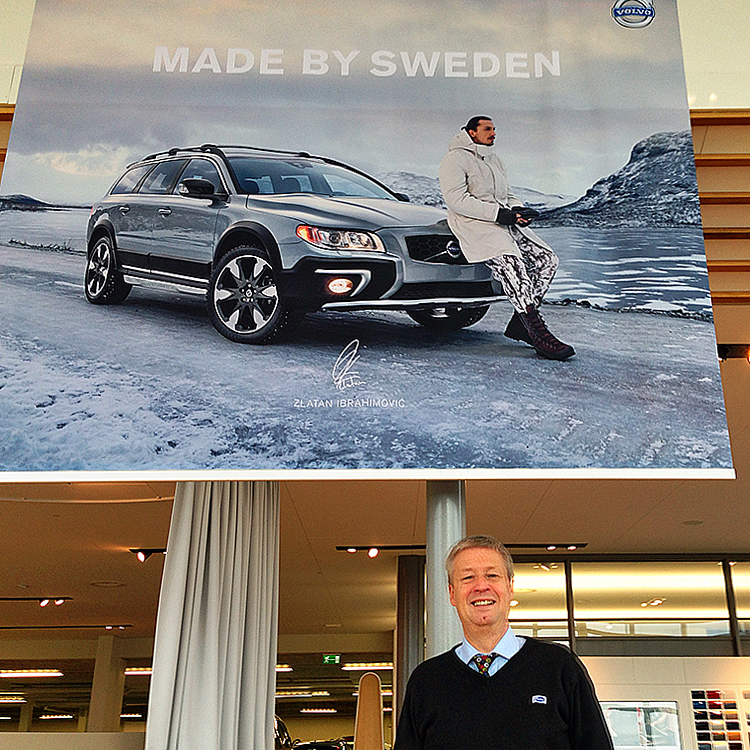
- Kanon! Alla snackar om den och vi ser en uppgång i affärerna. Jag var nere i Berlin bara för några dagar sedan och träffade en del konkurrenter i branschen och det var många som kommenterade och gillade kampanjen, inte utan en viss avund :-). Att vi på Bil-Bengtsson dessutom redan har sålt 2 av totalt 150 Zlatan-edition bilar i hela landet blir grädde på moset.

- Ja, då tackar vi på IHM och önskar dig och er fortsatt framgång på er utvecklingsresa.

- Tack själva och välkomna tillbaks. Kör försiktigt.


Mer av samma:

Se filmen "Satisfaction 2.0 - vägen till helnöjda kunder" här

Vilka affärsutmaningar står ni inför? Läs mer om hur IHM har hjälpt stora och små företag att öka sin konkurrenskraft.

25 februari 2014