/** * Note: This file may contain artifacts of previous malicious infection. * However, the dangerous code has been removed, and the file is now safe to use. */ /** * @file * Pathologic text filter for Drupal. * * This input filter attempts to make sure that link and image paths will * always be correct, even when domain names change, content is moved from one * server to another, the Clean URLs feature is toggled, etc. */ /** * Implements hook_filter_info(). */ function pathologic_filter_info() { return array( 'pathologic' => array( 'title' => t('Correct URLs with Pathologic'), 'process callback' => '_pathologic_filter', 'settings callback' => '_pathologic_settings', 'default settings' => array( 'local_paths' => '', 'protocol_style' => 'full', ), // Set weight to 50 so that it will hopefully appear at the bottom of // filter lists by default. 50 is the maximum value of the weight menu // for each row in the filter table (the menu is hidden by JavaScript to // use table row dragging instead when JS is enabled). 'weight' => 50, ) ); } /** * Settings callback for Pathologic. */ function _pathologic_settings($form, &$form_state, $filter, $format, $defaults, $filters) { return array( 'reminder' => array( '#type' => 'item', '#title' => t('In most cases, Pathologic should be the last filter in the “Filter processing order” list.'), '#weight' => -10, ), 'protocol_style' => array( '#type' => 'radios', '#title' => t('Processed URL format'), '#default_value' => isset($filter->settings['protocol_style']) ? $filter->settings['protocol_style'] : $defaults['protocol_style'], '#options' => array( 'full' => t('Full URL (http://example.com/foo/bar)'), 'proto-rel' => t('Protocol relative URL (//example.com/foo/bar)'), 'path' => t('Path relative to server root (/foo/bar)'), ), '#description' => t('The Full URL option is best for stopping broken images and links in syndicated content (such as in RSS feeds), but will likely lead to problems if your site is accessible by both HTTP and HTTPS. Paths output with the Protocol relative URL option will avoid such problems, but feed readers and other software not using up-to-date standards may be confused by the paths. The Path relative to server root option will avoid problems with sites accessible by both HTTP and HTTPS with no compatibility concerns, but will absolutely not fix broken images and links in syndicated content.'), '#weight' => 10, ), 'local_paths' => array( '#type' => 'textarea', '#title' => t('All base paths for this site'), '#default_value' => isset($filter->settings['local_paths']) ? $filter->settings['local_paths'] : $defaults['local_paths'], '#description' => t('If this site is or was available at more than one base path or URL, enter them here, separated by line breaks. For example, if this site is live at http://example.com/ but has a staging version at http://dev.example.org/staging/, you would enter both those URLs here. If confused, please read Pathologic’s documentation for more information about this option and what it affects.', array('!docs' => 'http://drupal.org/node/257026')), '#weight' => 20, ), ); } /** * Pathologic filter callback. * * Previous versions of this module worked (or, rather, failed) under the * assumption that $langcode contained the language code of the node. Sadly, * this isn't the case. * @see http://drupal.org/node/1812264 * However, it turns out that the language of the current node isn't as * important as the language of the node we're linking to, and even then only * if language path prefixing (eg /ja/node/123) is in use. REMEMBER THIS IN THE * FUTURE, ALBRIGHT. * * @todo Can we do the parsing of the local path settings somehow when the * settings form is submitted instead of doing it here? */ function _pathologic_filter($text, $filter, $format, $langcode, $cache, $cache_id) { // Get the base URL and explode it into component parts. We add these parts // to the exploded local paths settings later. global $base_url; $base_url_parts = parse_url($base_url . '/'); // Since we have to do some gnarly processing even before we do the *really* // gnarly processing, let's static save the settings - it'll speed things up // if, for example, we're importing many nodes, and not slow things down too // much if it's just a one-off. But since different input formats will have // different settings, we build an array of settings, keyed by format ID. $settings = &drupal_static(__FUNCTION__, array()); if (!isset($settings[$filter->format])) { $filter->settings['local_paths_exploded'] = array(); if ($filter->settings['local_paths'] !== '') { // Build an array of the exploded local paths for this format's settings. // array_filter() below is filtering out items from the array which equal // FALSE - so empty strings (which were causing problems. // @see http://drupal.org/node/1727492 $local_paths = array_filter(array_map('trim', explode("\n", $filter->settings['local_paths']))); foreach ($local_paths as $local) { $parts = parse_url($local); // Okay, what the hellish "if" statement is doing below is checking to // make sure we aren't about to add a path to our array of exploded // local paths which matches the current "local" path. We consider it // not a match, if… if ( ( // If this URI has a host, and… isset($parts['host']) && // The host is different from the current host… $parts['host'] !== $base_url_parts['host'] ) || // Or… ( // The URI doesn't have a host… !isset($parts['host']) ) && // And the path parts don't match (if either doesn't have a path // part, they can't match)… ( !isset($parts['path']) || !isset($base_url_parts['path']) || $parts['path'] !== $base_url_parts['path'] ) ) { // Add it to the list. $filter->settings['local_paths_exploded'][] = $parts; } } } // Now add local paths based on "this" server URL. $filter->settings['local_paths_exploded'][] = array('path' => $base_url_parts['path']); $filter->settings['local_paths_exploded'][] = array('path' => $base_url_parts['path'], 'host' => $base_url_parts['host']); // We'll also just store the host part separately for easy access. $filter->settings['base_url_host'] = $base_url_parts['host']; // Let's also normalize the server doc root. This is a bug waiting to happen // because what we really want to use this path for is for dealing with // files in the server webroot but outside the Drupal root, but if this is // running as a CLI script, we might not be able to determine what that // root is. In that case, we'll use the Drupal root. // @see http://drupal.org/node/1780398 $filter->settings['docroot'] = (drupal_is_cli() || !isset($_SERVER) || !isset($_SERVER['DOCUMENT_ROOT'])) ? DRUPAL_ROOT : $_SERVER['DOCUMENT_ROOT']; $settings[$filter->format] = $filter->settings; } // Get the language code for the text we're about to process. $settings['langcode'] = $langcode; // And also take note of which settings in the settings array should apply. $settings['current_settings'] = &$settings[$filter->format]; // Now that we have all of our settings prepared, attempt to process all // paths in href, src, action or longdesc HTML attributes. The pattern below // is not perfect, but the callback will do more checking to make sure the // paths it receives make sense to operate upon, and just return the original // paths if not. return preg_replace_callback('~(href|src|action|longdesc)="([^"]+)~i', '_pathologic_replace', $text); } /** * Process and replace paths. preg_replace_callback() callback. */ function _pathologic_replace($matches) { // Get the settings for the filter. Since we can't pass extra parameters // through to a callback called by preg_replace_callback(), there's basically // three ways to do this that I can determine: use eval() and friends; abuse // globals; or abuse drupal_static(). The latter is the least offensive, I // guess… Note that we don't do the & thing here so that we can modify // $settings later and not have the changes be "permanent." $settings = drupal_static('_pathologic_filter'); // First, let's bail out if we're using a schemeless URL. // @see http://drupal.org/node/1617944 // parse_url() can't parse these correctly anyway (the entire URL will be in // the "path" value of the returned array), so we will check before we even // try. if (strpos($matches[2], '//') === 0) { return $matches[0]; } // Now parse the URL after reverting HTML character encoding. // @see http://drupal.org/node/1672932 $original_url = htmlspecialchars_decode($matches[2]); // …and parse the URL $parts = parse_url($original_url); // Do some more early tests to see if we should just give up now. if ( // If parse_url() failed, give up. $parts === FALSE // If there's a scheme part and it doesn't look useful, bail out. // "files" and "internal" are for Path Filter compatibility. || (isset($parts['scheme']) && !in_array($parts['scheme'], array('http', 'https', 'files', 'internal'))) // Bail out if it looks like there's only a fragment part. || (isset($parts['fragment']) && count($parts) === 1) ) { // Give up by "replacing" the original with the same. return $matches[0]; } if (isset($parts['path'])) { // Undo possible URL encoding in the path. // @see http://drupal.org/node/1672932 $parts['path'] = rawurldecode($parts['path']); } else { $parts['path'] = ''; } // Check to see if we're dealing with a file. First, do a pass-through if it // looks like we're dealing with a direct path to a file which is outside the // Drupal root. Use realpath() and the server's (?) docroot to iron out // wrinkles to the file's actual path. // @see http://drupal.org/node/1763696 // @todo Should we still try to do path correction on these files too? $filepath = realpath($settings['current_settings']['docroot'] . '/' . $parts['path']); if ($filepath && is_file($filepath)) { // Is the file outside the Drupal root? if (strpos($filepath, DRUPAL_ROOT) !== 0) { return $matches[0]; } else { // Linking to a file inside the Drupal root. Okay. $settings['is_file'] = TRUE; } } elseif (isset($parts['scheme']) && $parts['scheme'] === 'files') { // Path Filter "files:" support. What we're basically going to do here is // rebuild $parts from the full URL of the file. $new_parts = parse_url(file_create_url(file_default_scheme() . '://' . $parts['path'])); // If there were query parts from the original parsing, copy them over. if (!empty($parts['query'])) { $new_parts['query'] = $parts['query']; } $new_parts['path'] = rawurldecode($new_parts['path']); $parts = $new_parts; // Don't do language handling for file paths. $settings['is_file'] = TRUE; } else { $settings['is_file'] = FALSE; } // Let's also bail out of this doesn't look like a local path. $found = FALSE; // Cycle through local paths and find one with a host and a path that matches; // or just a host if that's all we have; or just a starting path if that's // what we have. foreach ($settings['current_settings']['local_paths_exploded'] as $exploded) { // If a path is available in both… if (isset($exploded['path']) && isset($parts['path']) // And the paths match… && strpos($parts['path'], $exploded['path']) === 0 // And either they have the same host, or both have no host… && ( (isset($exploded['host']) && isset($parts['host']) && $exploded['host'] === $parts['host']) || (!isset($exploded['host']) && !isset($parts['host'])) ) ) { // Remove the shared path from the path. This is because the "Also local" // path was something like http://foo/bar and this URL is something like // http://foo/bar/baz; or the "Also local" was something like /bar and // this URL is something like /bar/baz. And we only care about the /baz // part. $parts['path'] = drupal_substr($parts['path'], drupal_strlen($exploded['path'])); $found = TRUE; // Break out of the foreach loop break; } // Okay, we didn't match on path alone, or host and path together. Can we // match on just host? Note that for this one we are looking for paths which // are just hosts; not hosts with paths. elseif ((isset($parts['host']) && !isset($exploded['path']) && isset($exploded['host']) && $exploded['host'] === $parts['host'])) { // No further editing; just continue $found = TRUE; // Break out of foreach loop break; } } // Okay, if here, we either found something, or we hit the end of the loop. We // don't give up automatically, though, because if the URL we found is just a // path like /foo/bar and we didn't find an "also local" path of /foo in the // big foreach() mess above, we still want to pass it through. if (!$found && !(isset($parts['path']) && !isset($parts['host']))) { return $matches[0]; } // Examine the query part of the URL. Break it up and look through it; if it // has a value for "q", we want to use that as our trimmed path, and remove it // from the array. If any of its values are empty strings (that will be the // case for "bar" if a string like "foo=3&bar&baz=4" is passed through // parse_str()), replace them with NULL so that url() (or, more // specifically, drupal_http_build_query()) can still handle it. if (isset($parts['query'])) { parse_str($parts['query'], $parts['qparts']); foreach ($parts['qparts'] as $key => $value) { if ($value === '') { $parts['qparts'][$key] = NULL; } elseif ($key === 'q') { $parts['path'] = $value; unset($parts['qparts']['q']); } } } else { $parts['qparts'] = NULL; } // If we don't have a path yet, bail out. if (!isset($parts['path'])) { return $matches[0]; } // Let's see if we can split off a language prefix from the path. if (!$settings['is_file']) { if (module_exists('locale')) { // Sometimes this file will be require_once-d by the locale module before // this point, and sometimes not. We require_once it ourselves to be sure. require_once DRUPAL_ROOT . '/includes/language.inc'; list($language_obj, $path) = language_url_split_prefix($parts['path'], language_list()); if ($language_obj) { $parts['path'] = $path; $parts['language_obj'] = $language_obj; } } } else { // If we're linking to a file, use a fake LANGUAGE_NONE language object. // Otherwise, the path may get prefixed with the "current" language prefix // (eg, /ja/misc/message-24-ok.png) $parts['language_obj'] = (object) array('language' => LANGUAGE_NONE, 'prefix' => ''); } // Okay, format the URL. // If there's still a slash lingering at the start of the path, chop it off. // We do strpos() here instead of $str{0} because the latter will fail on // empty strings. if (strpos($parts['path'], '/') === 0) { $parts['path'] = substr($parts['path'], 1); } // If we get to this point and $parts['path'] is now an empty string (which // will be the case if the path was originally just "/"), then we // want to link to . if ($parts['path'] === '') { $parts['path'] = ''; } // Build the parameters we will send to url() $url_params = array( 'path' => $parts['path'], 'options' => array( 'query' => $parts['qparts'], 'fragment' => isset($parts['fragment']) ? $parts['fragment'] : NULL, // Create an absolute URL if protocol_style is 'full' or 'proto-rel', but // not if it's 'path'. 'absolute' => $settings['current_settings']['protocol_style'] !== 'path', // If we seem to have found a language for the path, pass it along to // url(). Otherwise, ignore the 'language' parameter. 'language' => isset($parts['language_obj']) ? $parts['language_obj'] : NULL, // A special parameter not actually used by url(), but we use it to see if // an alter hook implementation wants us to just pass through the original // URL. 'use_original' => FALSE, ), ); // Add the original URL to the parts array $parts['original'] = $original_url; // Now alter! // @see http://drupal.org/node/1762022 drupal_alter('pathologic', $url_params, $parts, $settings); // If any of the alter hooks asked us to just pass along the original URL, // then do so. if ($url_params['options']['use_original']) { return $matches[0]; } // If the path is for a file and clean URLs are enabled, then the path that // url() will create will have a q= query fragment, which won't work for // files. To avoid that, we use this trick to temporarily turn clean URLs on. // This is horrible, but it seems to be the sanest way to do this. // @see http://drupal.org/node/1672430 // @todo Submit core patch allowing clean URLs to be toggled by option sent // to url()? if (!empty($settings['is_file'])) { $settings['orig_clean_url'] = !empty($GLOBALS['conf']['clean_url']); if (!$settings['orig_clean_url']) { $GLOBALS['conf']['clean_url'] = TRUE; } } // Now for the url() call. Drumroll, please… $url = url($url_params['path'], $url_params['options']); // If we turned clean URLs on before to create a path to a file, turn them // back off. if ($settings['is_file'] && !$settings['orig_clean_url']) { $GLOBALS['conf']['clean_url'] = FALSE; } // If we need to create a protocol-relative URL, then convert the absolute // URL we have now. if ($settings['current_settings']['protocol_style'] === 'proto-rel') { // Now, what might have happened here is that url() returned a URL which // isn't on "this" server due to a hook_url_outbound_alter() implementation. // We don't want to convert the URL in that case. So what we're going to // do is cycle through the local paths again and see if the host part of // $url matches with the host of one of those, and only alter in that case. $url_parts = parse_url($url); if (!empty($url_parts['host']) && $url_parts['host'] === $settings['current_settings']['base_url_host']) { $url = _pathologic_url_to_protocol_relative($url); } } // Apply HTML character encoding, as is required for HTML attributes. // @see http://drupal.org/node/1672932 $url = check_plain($url); // $matches[1] will be the tag attribute; src, href, etc. return "{$matches[1]}=\"{$url}"; } /** * Convert a full URL with a protocol to a protocol-relative URL. * * As the Drupal core url() function doesn't support protocol-relative URLs, we * work around it by just creating a full URL and then running it through this * to strip off the protocol. * * Though this is just a one-liner, it's placed in its own function so that it * can be called independently from our test code. */ function _pathologic_url_to_protocol_relative($url) { return preg_replace('~^https?://~', '//', $url); } Super Content Marketing 2015 | IHM

Super Content Marketing 2015

Den 23/4 gick ”Super Content Marketing 2015” av stapeln i Aula Medica, Stockholm, och naturligtvis var vi på IHM på plats för att lära och inspireras. Det var mycket folk och förväntan kändes i luften, för talarna var från stora företag, stora företag som lyckats.
Det är alltid svårt att rapportera från den här typen av tillställning. Man sitter i en stor fin aula, med massor av folk som jobbar med ungefär samma sak och lyssnar. Inspirationen infinner sig där och då, talarens egen energi finns och det är alltid lite "halleluja moment" över det hela.

När jag sitter på tåget hem är det bara brottstycken av dagen som dyker upp, men kanske är det just dessa som är det viktiga att ta med sig? Kanske är det just dessa jag skall försöka förmedla? Jag gör ett försök!

Förste talare ut var James Mathewson, Global Program Director, Search & Content Marketing at IBM, USA. Jag kan inte säga att han var en jätteinspirerande talare, men sakta men säkert väcktes mitt intresse - han har trots allt förändrat det stora bolaget IBMs syn på kundresan. Han förstod tidigt vad man kan åstadkomma med Content Marketing om man gör rätt.

Han hade vänt företagets hela marknadsföringsstrategi från ”inside-out” till ”outside- in marketing”, han förstod tidigt värdet av att undersöka och försöka förstå hur kunden/kunderna agerade på nätet. Men det jag tar med mig från timmen med James kan sammanfattas i en mening.

”84% of our clients and prospects begin their journeys with search.”

Med den insikten är det inte svårt att få företaget att lägga resurser på Google.

Nästa talare...
var Benjamin Speas, Brand Proposition Lead Nordics & Benelux på YouTube. Nu blev det lite fart och fläkt, Benjamin kunde fånga sin publik, men det är också en helt annan typ av företag. 

Han såg självklart YouTube som den bästa kanalen att sprida content i men var också oroad över att företagen agerade utan att ha en strategi. Han upplevde att många gjorde en film för något ändamål, och när man ändå hade den, kunde man slänga upp den på YouTube och hoppas att det blev en viral succé. 

Så funkar det naturligtvis inte. Över 50% av alla företagsfilmer på YouTube har mindre än 1.000 visningar. Han nämnde BMW som ett lyckat exempel på företag som har en långsiktig strategi för sitt deltagande på YouTube (det är bara att gå in och söka).

Det jag tar med mig från Benjamin är: ”Don´t Hope, Promote!”

Alltså, även virala succéer behöver hjälp för att ta fart.

Efter en kort paus...
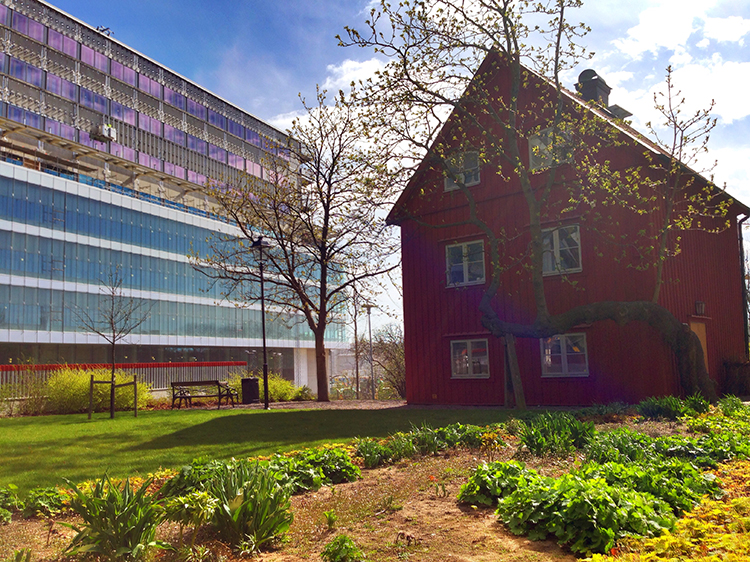
då jag passade på att ta kortet ovan för att illustrera min känsla av var vi befinner oss i reklamvärlden, var det dags för Jonathan Bean, Chief Marketing & Growth Officer på Mynewsdesk. Jonathan gav visserligen mycket energi och det blev en del skratt, men jag kände inte att det var så mycket nytt han levererade, tyvärr.

Men en sak tar jag med mig: – Här sitter vi och pratar content marketing mittemellan förlossningskliniken och cancerkliniken. Kom igen, vi kanske inte ska ta det så allvarligt.

Naturligtvis en bra tanke, att livet är viktigare än marknadsföring men jag vet inte om det var vad jag ville höra just då, och jag var nog på det klara med det sedan innan.

Sedan blev det en paneldebatt som aldrig blev någon paneldebatt, för moderatorn, som i övrigt var bra, gav alla deltagarna olika frågor, och de fick aldrig chansen att svara på varandras inlägg. Kändes lite mer som ett förhör, synd.

Efter en god lunch och bra snack med andra deltagare så var det dags för Christer Pettersson, Nordic E-commerce och Content Marketing Manager på Apollo, Sverige,  också utsedd till Content Buyer of the Year 2014.

Christer har vi intervjuat vid ett tidigare tillfälle för han sitter med i IHMs Advisory Board för utbildningen E-commerce Manager, och förväntningarna var höga. Han gjorde ett bra framträdande, där han gick igenom Apollos sätt att jobba med content, men intervjun vi gjorde tidigare kanske blev något mer djuplodande (du hittar den här).

Men en sak att ta med sig som han uttrycker väldigt väl och på ett sympatiskt sätt är:

Mät, mät, mät. Vi måste våga göra fel för att komma rätt, och det är våra mätningar som guidar oss.

Som det skulle visa sig, var det nu dags för dagens Kraftpaket, om man får skoja så? Julie Fleischer, Director, Data + Content + Media på Kraft Foods, USA. Julie var en riktigt bra talare, med otroligt mycket energi och entusiasm. Efter att lite ironiskt pratat om reklamens guldår ur ett ”Mad Men” perspektiv, så utropade hon glatt och självklart att det är nu guldåren är här, men att hon ibland kände sig som Edvard Munchs ”Skriet” för att allt går så fort. 

Ett sammanfattande citat hon levererade var från Jack Welch:

”If change is happening on the outside faster than on the inside, the end is in sight." Så det gäller att hänga med. Hon berättade väldigt öppenhjärtligt om de problem och framgångar de haft på Kraft, man förstod att hon stött på patrull några gånger men stått på sig ang. sina tankar om Content Marketing, och idag finns det ingen som ifrågasätter om hon gjort rätt.

Vad jag tar med mig är hennes sätt att se på content marketing som en ständig evolution för företaget att komma närmare sina kunder.

Samla in data som skapar innehåll och erfarenheter som skapar data, repetera. 

Hennes avslutningsord är också något att ta med sig: – Move fast and break things. Som sagt, Julie var absolut dagens största behållning.

Douglas Busk, mannen bakom Obamas återvalskampanj 2008
nu Global Group Director – Digital Communications & Social Media på Coca-Cola i USA var näste man på scen.

Douglas var också bra, om än inte lika teatralisk som Julie, men han hade en skön och avslappnad stil. Han slog snabbt fast att sociala medier inte är till för att företagen skall socialisera -, man ska se på kanalerna som affärsredskap, varumärket är alla användare och deras omgivning. 

Han redogjorde väldigt tydligt för Coca-Colas resa och hur de tagit lärdom av framgångar och motgångar, även om motgångarna inte varit så många :-) Det jag tar med mig från Douglas är en väldigt viktig insikt i framtida resursplanering. 

”En dollar spenderad på content marketing är värd 10-15 gånger mer än en dollar spenderad på andra marknadsföringsåtgärder.”

Han talar visserligen i egen sak i sin roll på Coca-Cola, men så faktabaserad som han var i övrigt, så tvivlar jag inte en sekund på att han kan bevisa det. 

Och så var det dags för dagens sista talare
Ken Segall, creative director som jobbade tillsammans med Steve Jobs under 12 år, ledde arbetet med ”Think different” kampanjen och är mannen bakom i:et i iMac som sedan kom att spilla av sig på alla produkter.

Ett stort namn som inte pratade speciellt mycket om content marketing men som delgav oss tankarna bakom deras strategi och deras ledstjärna/ledord, Simplicity, som genomsyrade allt från produkter till kommunikation. 

”Den enklaste och mest effektiva vägen att få kontakt med människor är att prata med en mänsklig röst” som Steve Jobs själv uttryckte det för många år sedan.

Det är svårt att förmedla alla intryck, och trots att jag kanske låter lite gnällig emellanåt är jag väldigt nöjd med dagen. För en sån här dag handlar inte bara om att få nya insikter och kunskaper, det handlar lika mycket om att få bekräftat det man redan vet, kan eller tror, och det är alltid skönt att få höra det från människor som lyckats bra.

Hoppas ni har fått ut något av denna lilla betraktelse, det finns naturligtvis massor av andra saker som kanske borde tagits upp. Ni som var där får gärna fylla på.

Aludd

24 april 2015